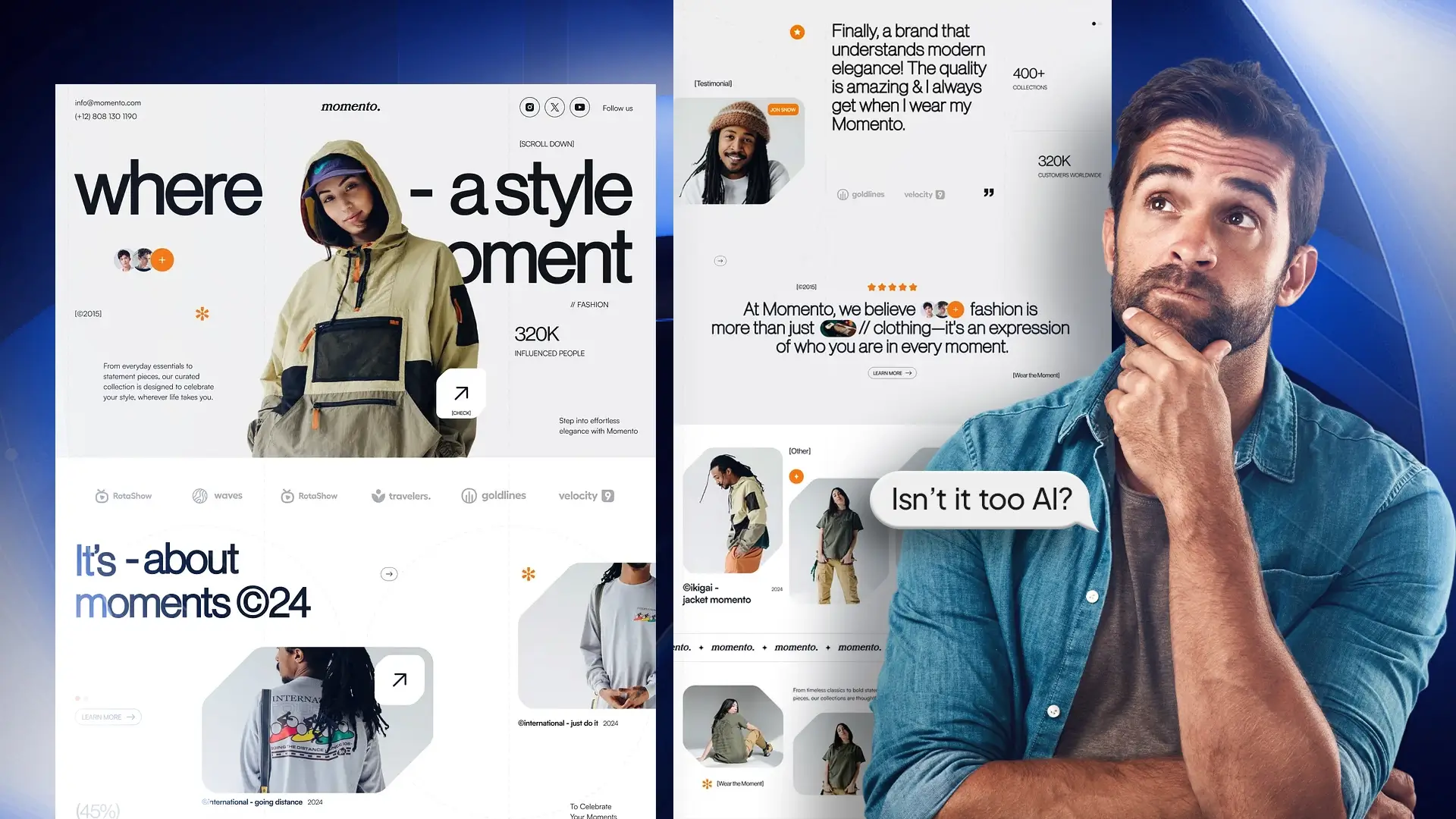

Why is perfect design failing to convert in 2026?

The Problem With Perfection

Why Wonky Design Is Winning in 2026

The Anti-AI Design Aesthetic: Why Imperfection Builds Trust
- Torn paper effects and scissor-cut collages
- Stitched textures and digitally simulated embroidery
- “Low ink” typography that looks like it came from a dying photocopier
- Grainy CCTV footage aesthetics and intentional glitch effects
- Hand-drawn illustrations with shaky, imperfect lines
What This Means For Your Brand
- ✓ Perfect design triggers distrust—imperfection signals authenticity
- ✓ Wonky serifs and tactile textures prove human involvement
- ✓ Major brands (Affinity, Eventbrite, Radford) embrace “messy” aesthetics
- ✓ Anti-AI design elements = competitive advantage in crowded markets
- ✓ Strategic white space combats digital noise and builds trust
- Increased trust: 73% of consumers can detect AI-generated content and find it less credible
- Better engagement: Authentic, human-touched designs see higher click-through rates
- Stronger differentiation: In a sea of AI perfection, imperfection makes you memorable
- Future-proof branding: As AI capabilities grow, human authenticity becomes more valuable

1. Add the Human Hand to Your Design
If your logo looks like it could’ve been generated in three seconds by an AI tool, it probably needs more personality. Think about where you can add a curve that feels slightly off, or a texture that gives it depth. Hand-drawn elements, custom lettering, and asymmetrical compositions all signal human touch.
2. Embrace the "Mistake" That Makes It Memorable
That thing you think is wrong with your design? The element that’s not quite aligned? Sometimes that’s exactly what makes it memorable. Obviously, know the rules before you break them, but don’t be afraid to break them. Imperfect design often performs better than perfect design because it stands out.
3. Use White Space and Simplicity Deliberately
Pantone’s 2026 Color of the Year is literally white—Cloud Dancer, to be specific. They didn’t choose it because they ran out of ideas, but because in a world drowning in noise, neutrality is the loudest statement you can make. Sometimes the most impactful design is the one that strips everything away and lets the imperfect details breathe.
4. Get Tactile, Even in Digital Spaces
Even in digital spaces, we’re craving texture. Paper grain, fabric weaves, embroidered details, hand-drawn elements—these aren’t just retro throwbacks, they’re reminders that real people made this thing. The tactile craft trend is exploding because it creates an emotional connection that smooth, AI-generated gradients simply can’t match.

Why Authentic Design Matters Now

Authentic Design Wins in 2026
Frequently Asked Questions About Perfect Design
How can I make my design look more human and less AI-generated?
What are the best examples of imperfect design in 2026?
Does imperfect design work for all industries?
Why do wonky serif fonts build more trust than clean sans-serifs?
Ready to make your brand design feel more human?
The brands leading in 2026 aren't chasing AI-perfect aesthetics—they're strategically embracing imperfection to build trust. Understanding which "imperfect" elements work best for your specific industry can be the difference between blending in and standing out.
Learn More