
The short answer: restaurants win in 2026 by being the easiest to find, order from, and come back to. Optimize your Google Business Profile, make mobile ordering effortless, engineer the menu around profit per dish, and turn first-timers into regulars. The 12 strategies below cover exactly how.
Running a restaurant in 2026 is tough. Costs are up, customers are more selective, and the competition is fierce. But here’s the good news: restaurants still capture about 53 cents out of every dollar Americans spend on food. The restaurants that are winning aren’t necessarily the ones with the best food, they’re the ones that make it easiest for hungry people to find them, order from them, and come back again and again.
This guide gives you 12 proven strategies to increase restaurant sales in 2026 Whether you’re a single-location owner or managing multiple spots, these tactics work.
Strategy #1: Optimize Your Google Business Profile (It’s Free and It Works)
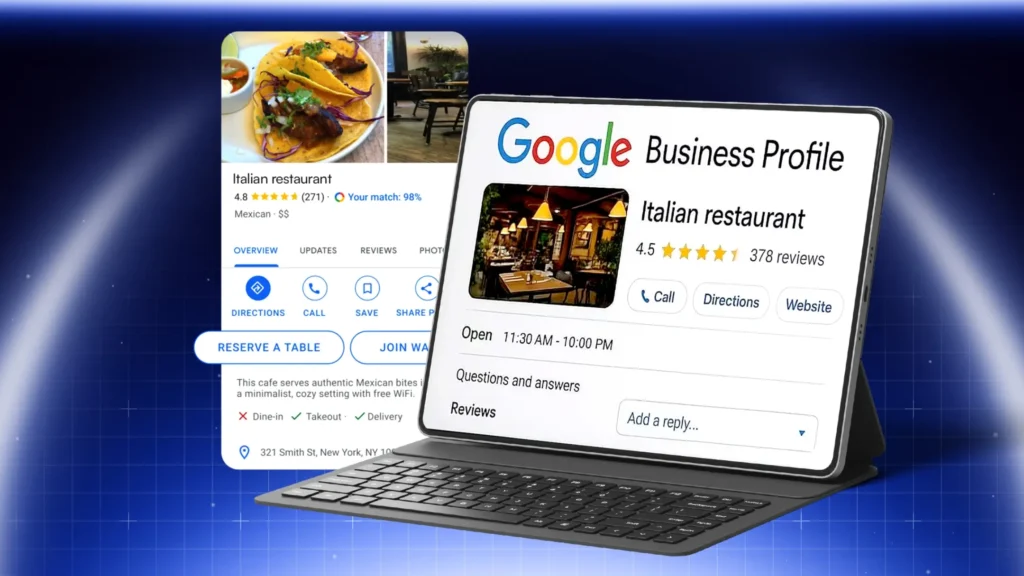
Before a customer ever walks through your door, they Google you. Your Google Business Profile (GBP) is usually the very first thing they see – and most restaurants treat it like an afterthought by not responding to reviews.
Here’s what that’s costing you: restaurants with fully optimized GBP listings see 4x more phone calls, 4.4x more direction requests, and 4.5x more website visits compared to restaurants with neglected profiles. That’s not a small difference.
Keeping your profile optimized doesn’t mean setting it up once and forgetting it. It means treating it like a living thing:
• Upload new food and interior photos at least once a week
• Keep your hours accurate (especially holidays and special events)
• Reply to every single review, good or bad, within 24 hours
• Add your menu directly to your profile so people can browse without leaving Google
• Use the “Posts” feature to promote specials and events
By the way, when you respond to reviews, naturally include your location and cuisine type. For example: “Thanks for visiting us here in downtown Austin! We’re so glad you loved our wood-fired pizza.” Google reads those responses and uses them to rank you for local searches
Strategy #2: Show Up on Google Searches
SEO sounds intimidating, but for a restaurant it really comes down to one thing: making sure Google understands exactly who you are, where you are, and what you serve so it can recommend you when hungry people are searching nearby.
Here’s how Google works in 2026: it’s not just showing a list of websites anymore. It’s using AI to pull together answers directly on the search page. When someone types “best kid-friendly pizza near me with outdoor seating,” Google’s AI reads dozens of websites and picks the restaurants that have clearly communicated that information. If your website doesn’t say those things clearly, you won’t show up.
The basics that move the needle most:
• Put your city/neighborhood name and cuisine type on your homepage
• Add “schema markup” to your website – this is special code that labels your menu items, hours, and prices so Google can read them easily. Ask your web developer about it, or use a plugin if you’re on WordPress
• Make sure your name, address, and phone number are exactly the same everywhere online – Google, Yelp, TripAdvisor, your website, everywhere
• Write a short blog post or webpage for your most popular dish or dining occasion (e.g., “Best Date Night Restaurant in [Your City]”)
Think of it this way: every piece of clear, organized information you put online is like raising your hand in a room full of restaurants. The more hands up, the more Google picks you.
Strategy #3: Get More (and Better) Customer Reviews
Customer reviews aren’t just for reputation anymore – they’re a direct ranking signal that Google uses to decide who shows up first in search results. Google’s AI actually reads the text of reviews and uses specific words customers write to match your restaurant with future searches.
Here’s a real example of how powerful this is: when a happy customer writes “best vegan brunch in downtown Austin,” Google indexes that exact phrase. The next time someone searches “vegan brunch downtown Austin,” your restaurant gets a visibility boost — for free, because a customer said something nice.
How to get more reviews without being annoying about it:
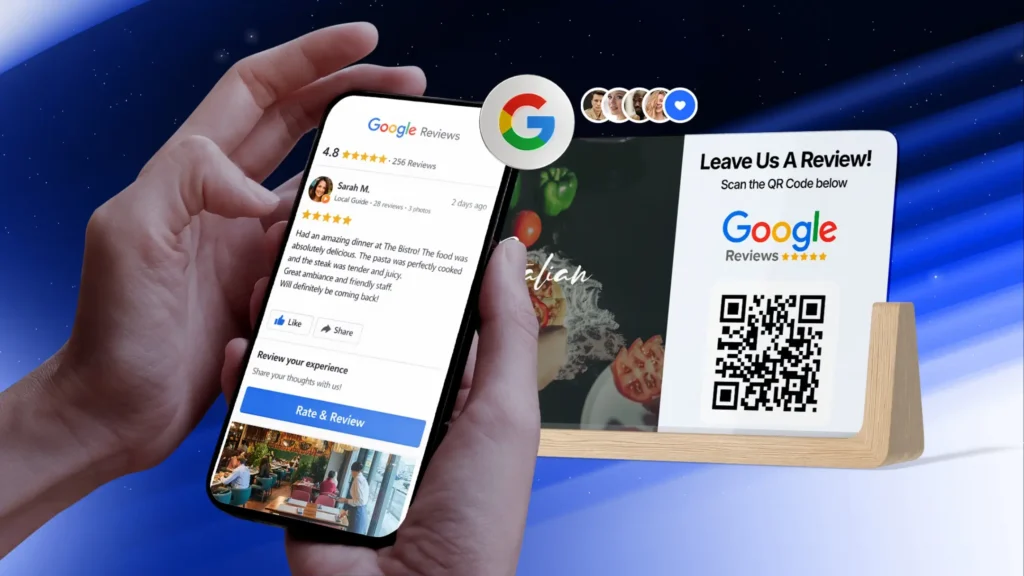
• Train your staff to mention it at the end of a great meal: “We’d really appreciate a quick Google review if you enjoyed your visit!”
• Put a QR code on your receipts and table cards that goes straight to your Google review page
• Send a follow-up text or email an hour after a delivery order asking for feedback
• Respond to every review — this shows Google your profile is active and shows customers you actually care
One important note: never offer discounts or freebies in exchange for reviews. Google can detect this and it can get your listing penalized. Just ask sincerely — most happy customers are willing to help if you make it easy.
Strategy #4: Make Your Website Work on Phones
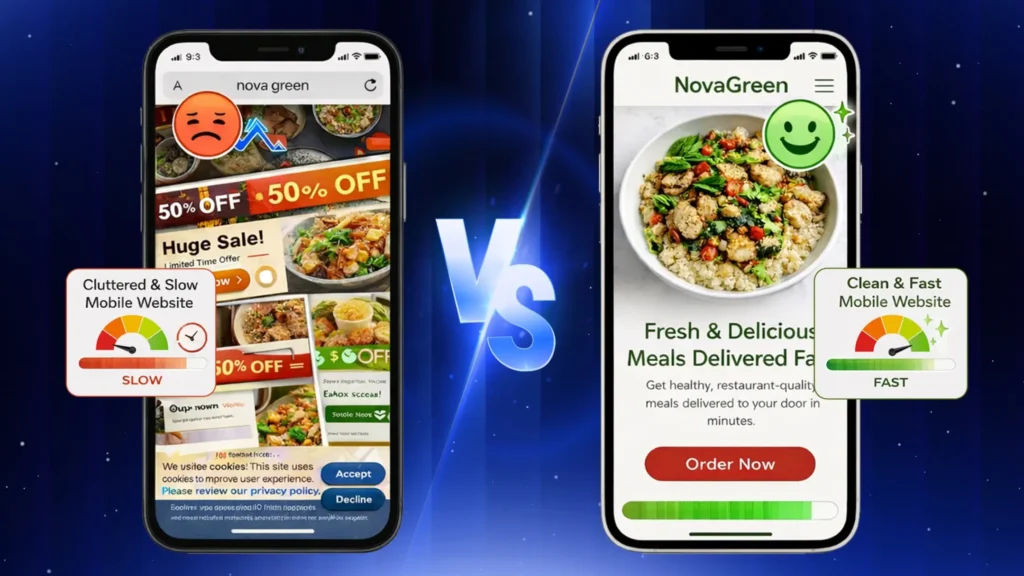
Over 60% of online food orders are placed on a smartphone. That means if your website is slow, hard to read on a small screen, or requires pinching and zooming, you’re turning away more than half your potential customers before they even see your menu.
A restaurant website in 2026 has one job: get someone from “I’m hungry” to “order placed” as fast as possible.
Here’s what that looks like in practice:
• Your menu, ordering link, and reservation button should all be visible without scrolling — right at the top of the page
• Pages should load in under 3 seconds on a phone. If they don’t, you need faster hosting or smaller image files
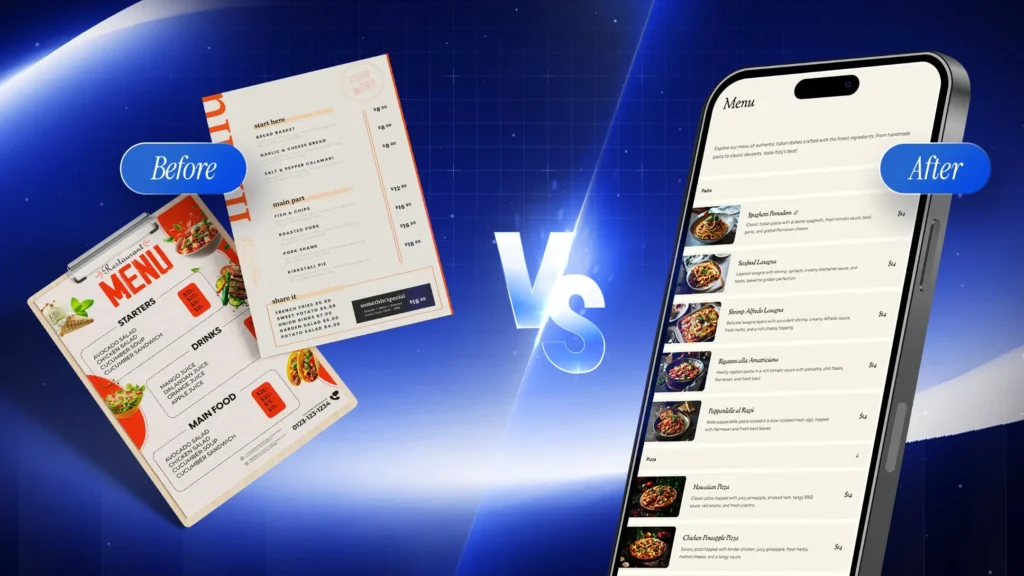
• No PDFs. Ever. PDF menus are a conversion killer on mobile — they’re slow to load and impossible to read on a small screen
• Online ordering should require zero account creation. Every extra step loses customers
My best advice here is to put yourself in the shoes of your customers. See what they’re experiencing on your site by pulling out your phone and try to order. If it takes more than 60 seconds to find the menu and place an order, you’re losing sales every single day.
Strategy #5: Engineer Your Menu to Sell Your Most Profitable Dishes
Here’s something that surprises most restaurant owners: the way your menu is organized has a bigger impact on your profits than almost anything else. This is called “menu engineering” — and the restaurants that do it well consistently outperform the ones that don’t.
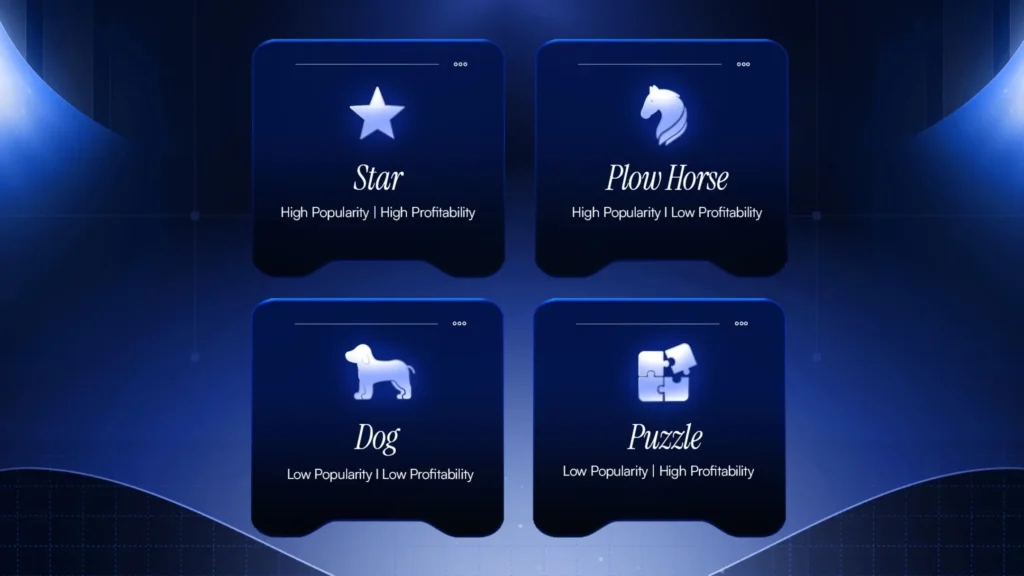
The idea is simple. Every dish on your menu falls into one of four categories:
1. Stars (Popular AND profitable): Your best dishes. people love them AND they make you good money. Put these at the top of each menu section, give them the best photos, and maybe add a “House Favorite” badge. These are your moneymakers.
2. Plowhorses (Popular but low profit): People order these all the time, but they don’t make you much money. The fix? Suggest high-margin add-ons alongside them. “Add truffle fries for $4?” or “Make it a combo?” can turn a low-margin item into a profitable order.
3. Puzzles (Profitable but not popular): These are hidden gems — great margins, but nobody orders them because they’re buried in the middle of your menu or have a boring description. Move them to a “golden zone” (top of the list or center of the page), give them a better name, and add a photo. One rewrite can triple sales on these.
4. Dogs (Not popular AND not profitable): Cut them. They take up menu space, confuse customers, waste ingredients, and add kitchen complexity. With a digital menu, you can delete them instantly.
Strategy #6: Switch to a Digital Menu (This Alone Can Boost Sales 15–20%)
If you’re still using printed paper menus, you’re leaving real money on the table. Restaurants that switch to digital menus report average sales increases of 15–20%, and save around $3,800 a year on printing costs alone. Here’s why digital menus are so much more powerful:
• You can update prices instantly when ingredient costs go up — no reprinting, no eating the loss
• Out-of-stock items disappear automatically — no more “sorry, we’re out of that” conversations
• High-profit items can be highlighted with photos, badges, and smart placement
• You can run a limited-time special tonight and remove it tomorrow morning
• Color psychology, photo placement, and item order all subtly guide customers toward higher-margin choices
Eye-tracking studies show that customers focus most on the top-left of a screen, the center, and the first and last items in any category. Put your Stars there. Push your Dogs to the middle. It sounds small, but it compounds into thousands of dollars over a year.
The colors on your menu matter too — red creates urgency and works great for limited-time offers, orange stimulates appetite for comfort foods, and green signals healthy/fresh options. These aren’t just design choices; they’re psychological triggers that influence what people order.
Strategy #7: Focus on Profit Per Dish, Not Just Food Cost Percentage
This is one of the most misunderstood concepts in the restaurant industry — and getting it wrong quietly kills profits.
Most restaurant owners obsess over food cost percentage (the percentage of a dish’s price that goes to ingredients). But here’s the problem: percentages don’t pay your rent. Actual dollars do.
Here’s a real example that makes this crystal clear:
• A $28 burger with 28% food cost = $20.16 left over for labor, rent, and profit
• A $14 salad with a “great” 22% food cost = only $10.92 left over
To make the same money from salads as burgers, you’d need to sell nearly two salads for every one burger — which means double the prep time, double the plates, and more time tying up your tables. The salad’s lower food cost percentage is actually less efficient.
The fix: use your digital menu to prominently feature high-dollar-contribution dishes, regardless of their percentage. Track contribution margin (the actual dollar amount each dish puts toward your overhead and profit) and design your menu around it.
Strategy #8: Use Dynamic Pricing and Time-Based Specials
Airlines charge more on Friday nights. Hotels charge more during conferences. About 31% of restaurants are now doing the same thing — and the ones doing it are protecting their margins in ways that flat pricing simply can’t.
With a digital menu, you can:
• Slightly raise prices during Friday and Saturday dinner rush when demand is highest
• Automatically show a happy hour bundle deal during slow Tuesday afternoons to drive traffic
• Instantly update a dish’s price if a key ingredient suddenly spikes in cost — no waiting for the next print run
• Run a “limited tonight only” special that creates urgency and moves high-margin inventory
This isn’t about gouging customers – it’s about running your restaurant like the business it is. A small price adjustment during peak hours can add up to thousands of dollars a month without a single new customer walking through the door.
Strategy #9: Take Orders Through WhatsApp and Cut Out the Middleman
Nobody wants to download a new app just to order from one restaurant. That’s why the restaurant industry is rapidly shifting toward ordering through messaging apps people already use every day — especially WhatsApp, which has over 2 billion active users.
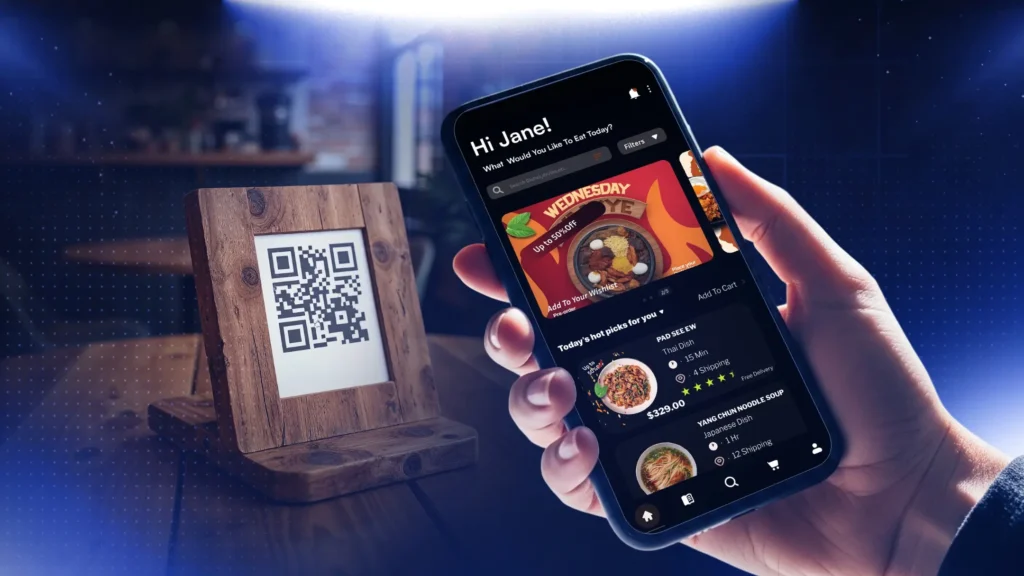
Here’s how it works: a customer scans a QR code on their table or clicks a link, browses your full menu with photos right inside WhatsApp, adds items to a cart, and sends the order straight to your kitchen. No app download. No account creation. No passwords. Tools like
Here’s how it works: a customer scans a QR code on their table or clicks a link, browses your full menu with photos right inside WhatsApp, adds items to a cart, and sends the order straight to your kitchen. No app download. No account creation. No passwords. Tools like WhatsMenu make this setup simple to get running for any restaurant.
But the biggest benefit isn’t convenience — it’s ownership. When a customer orders through DoorDash or UberEats, those platforms keep the customer’s contact info. You get the sale, but they own the relationship. When customers order directly through your own system, you get their phone number and order history. That means you can:
• Send a personalized promo on their birthday
• Alert them about a new seasonal menu
• Ask for a review right after their meal when they’re still happy
• Build a real relationship without paying a middleman 15–30% commission
Strategy #10: Build a Loyalty Program That Feels Personal
Old-school loyalty programs were punch cards. Modern loyalty is about making customers feel like you actually know them — and technology now makes that possible even for small, independent restaurants.
When your digital ordering system tracks purchase history, you can do things that used to only be possible at high-end fine dining restaurants with exceptional memory:
• Suggest a customer’s usual order before they even start browsing
• Remember dietary restrictions and filter recommendations accordingly
• Send a “happy birthday” deal on their actual birthday with their favorite dish
• Reward frequent visitors with exclusive early access to new menu items
Here’s a stat worth knowing: customers using gift cards spend an average of 60% more than the card’s face value. Combine that with a bounce-back offer (“come back this week and get a free dessert”) and you’ve turned one visit into two.
The give-before-you-ask rule: if every message you send customers is “BUY NOW” or “10% off today only,” people tune out fast. For every promotional message, send 3–4 messages that are genuinely valuable first — a recipe, a behind-the-scenes kitchen video, a community shoutout. When you finally make an offer, customers are actually glad to hear from you.
Strategy #11: Use Social Media Like a Search Engine (Because It Is One Now)
Younger customers — especially Gen Z and Gen Alpha — often skip Google entirely when looking for restaurants. They go straight to TikTok or Instagram and search there. And here’s something most restaurant owners don’t know yet: Google now indexes social media content in regular search results.
That means a well-made TikTok video of your signature dish being prepared can show up when someone Googles “best tacos in Nashville” — competing directly with traditional websites. Social media isn’t just for awareness anymore. It’s a full search and discovery channel.
What actually works on social in 2026:
• Short videos (15–30 seconds) of food being made or plated — authenticity beats polish every time
• Behind-the-scenes content: your chef, your sourcing, your prep — people connect with people
• Location keywords in captions — not just hashtags, but actual words like “downtown Chicago” or “South Austin”
• Reposting customer photos and videos (with permission) — this is called user-generated content and it’s gold
• Local micro-influencers: someone with 5,000 engaged local followers beats a national influencer with 500,000 disengaged ones every time
Every customer photo tagged at your restaurant, every honest review posted, every story shared is a signal to Google’s AI that your restaurant is real, active, and trustworthy. Make it easy and fun for customers to share — maybe a small discount or a free dessert in exchange for a post.
Strategy #12: The Most Common Restaurant Leaks Today
Here’s something most marketing guides won’t tell you: before you spend a dollar trying to get more customers, make sure you’re not losing money from the customers you already have.
The most common hidden profit leaks in restaurants:
• Untracked comps and voids — free meals and discounts that happen without manager approval add up fast
• Over-ordering ingredients — buying more than you need leads to spoilage, which is pure lost money
• Staffing misalignment — having your full crew on a slow Tuesday afternoon costs more than it brings in
• Menu items with terrible margins that stay on the menu out of habit
• Third-party delivery commissions eating 15–30% of every order
A digital menu integrated with your POS system helps catch most of these. When you can see in real time which dishes are selling, what your actual food cost is running, and which hours need fewer staff — you can fix leaks before they drain your profits.
The math is simple: saving $500 a month in waste and inefficiency has the same impact as bringing in $500 in new revenue — but it requires zero advertising spend.
Increasing restaurant sales in 2026 is about doing 12 relatively simple things consistently — and each one compounds on the others. Get found on Google, make it easy to order, engineer your menu around profit, keep customers coming back, and plug the leaks.
The restaurants winning right now aren’t necessarily the ones with the best food. They’re the ones that are easiest to find online, easiest to order from, and best at making customers feel like they matter. Technology doesn’t replace great hospitality — it gives you more time to deliver it.
Here’s your action plan — start with the easiest wins first:
• This week: Update your Google Business Profile, reply to all recent reviews
• This month: Audit your menu using the Stars/Plowhorses/Puzzles/Dogs framework
• This quarter: Switch to a digital menu, set up direct ordering, and launch a simple loyalty program
• Ongoing: Post consistently on social with location keywords, ask for reviews, track contribution margin
The restaurants that will thrive in 2026 are the ones that start today. Pick one strategy from this list and implement it this week. Then do the next one. Small, consistent improvements compound into massive results over time.
Frequently Asked Questions
What is the fastest way to increase restaurant sales?
Optimize your Google Business Profile first: it is free, and fully optimized listings see 4x more calls and 4.4x more direction requests. Most restaurants treat it as an afterthought, which makes it the fastest gap to close.
Do digital menus really increase sales?
Switching to a digital menu alone can boost sales 15-20%, because you can update pricing instantly, feature high-margin dishes, and suggest add-ons at the moment of ordering.
How important is my restaurant website?
Over 60% of online food orders happen on a smartphone. Your website has one job: get someone from hungry to order placed in under a minute, on a phone.
What is menu engineering?
Sorting dishes by popularity and profit into stars, plowhorses, puzzles, and dogs, then promoting the stars, upselling around the plowhorses, repositioning the puzzles, and cutting the dogs.
Want This Running for Your Restaurant?
We run local SEO, Google Business Profiles, and high-converting websites for restaurants and the companies that build them: see how we grew a restaurant design company’s visibility 1,500%. Explore our SEO plans and website design pricing, or book a free strategy call.