

Something interesting is happening right now in design. AI can generate technically flawless visuals in seconds. Perfect lighting. Perfect symmetry. Perfect composition. And yet, brands that look too perfect are losing. People scroll past them without a second thought.
This is the defining tension of graphic design in 2026: the more capable AI becomes at producing perfection, the more audiences gravitate toward work that looks unmistakably human.
The data backs it up. Canva’s 2026 Design Trends Report, drawn from analysis of over 260 million users, declared this the year of “Imperfect by Design.” Searches for DIY and collage-inspired elements surged 90% year over year. Searches for hand-drawn and imperfect design elements rose 30% according to Adobe’s Creative Trends data. Meanwhile, the global graphic design market is valued at $59.29 billion in 2026 and is projected to reach $85.53 billion by 2031.
Design is not shrinking. It is shifting. And the brands navigating that shift well all understand one thing: your audience can detect artificial polish, and it makes them trust you less.
Here is what is actually driving graphic design in 2026, and what it means for your brand.

How Graphic Design Got Here: 20 Years of Change
To understand 2026, you need to understand how fast this industry has moved.
Twenty years ago, the average brand’s visual toolkit was limited. Print dominated. Digital design was emerging. Tools like Photoshop existed, but the internet had not yet become the all-consuming visual arena it is today. Design was a specialist skill, inaccessible to most businesses without hiring an agency.
The 2010s changed everything. Social media turned every business into a publisher. Mobile-first design became non-negotiable. Flat design and minimalism swept the industry as brands raced to simplify for small screens. Clean, geometric, frictionless. That was the aesthetic standard for most of the decade.
Then came the 2020s. Templates proliferated. Canva put design tools in the hands of anyone. And then AI arrived and removed even the remaining barriers. What once took a skilled designer hours could now be produced in seconds. The result? A market flooded with polished, algorithmically consistent visuals that all started to look the same.
That saturation is exactly what is fueling today’s backlash.
Is the Graphic Design Industry Growing?
Yes, significantly. The graphic design market sits at $59.29 billion in 2026 and is on track to hit $85.53 billion by 2031, growing at a 7.60% CAGR. This growth is driven by the explosion of digital content, e-commerce, social media marketing, and the rising need for consistent brand identity across multiple platforms.
According to Clutch’s 2026 industry data, 90% of businesses rely on graphic designers in some capacity. Nearly two-thirds hire external design support at least quarterly. Despite widespread AI adoption, businesses are not cutting design budgets. They are reallocating them toward strategic, brand-level creative work that AI tools cannot reliably handle.
That said, the nature of the work is changing fast. The Bureau of Labor Statistics projects slow overall employment growth of around 2 to 3%, but specialized digital roles in UX/UI and motion design are expanding much faster, with some projections putting digital designer growth at 7% or higher. The designers who will struggle are those doing repetitive, template-driven production work. The ones who will thrive combine strategic thinking with strong craft.
As Cat van der Werff, Executive Creative Director at Canva, put it:
2026 marks the year of Imperfect by Design, a time when blending AI seamlessly with human imagination and creativity has never mattered more.
Cat van der Werff
Tweet
The 2026 Graphic Design Trends You Need to Know

1. The Anti-AI Aesthetic Is Now a Brand Strategy
This is the biggest shift in design right now.
As AI-generated imagery floods every corner of the internet, audiences have developed a subconscious ability to detect it. The too-clean gradients. The technically flawless but oddly soulless compositions. The faces that are slightly off in ways you can’t explain. Viewers pick up on it, even when they cannot articulate why. And when they do, trust drops.
The response from leading brands has been deliberate imperfection. Torn paper effects. Scissor-cut collages. Stitched textures. Digitally simulated embroidery. Hand-drawn illustrations with shaky, purposeful lines. These are not careless mistakes. They are intentional signals that a human made creative decisions here.
Adobe’s 2026 design data shows 73% of designers are now deliberately incorporating imperfect elements to differentiate their work from AI-generated content. This is not a niche trend. It is a mainstream brand strategy.
Brands like Affinity (recently acquired by Canva) rebranded with a lowercase mark featuring swooping, almost hand-drawn curves. Eventbrite launched a logo they call “The Path,” a bouncy, fluid design built specifically to feel less corporate and more human. Radford Beauty uses messy, hand-scrawled typography on frosted glass packaging to signal that their product cares more about ingredients than gloss.
These are not accidents. They are calculated moves to build trust in an era of AI saturation.

2. Wonky Serifs and Expressive Typography Are Replacing Clean Geometric Fonts
The clean, geometric sans-serifs that defined the 2010s are on their way out. What is replacing them feels almost opposite: bouncy, asymmetrical serif fonts that look like they were drawn by hand rather than generated by software.
Canva data shows searches for “clean layout,” “serif,” and “simple branding” climbed 54% year over year. That is partly the minimalist countertrend, but it also reflects a broader desire for typography with personality. Wonky serifs, irregular letterforms, and bouncy type signal that a designer made choices rather than an algorithm selecting defaults.
If your brand currently uses a generic geometric font, ask yourself whether it could have been chosen by any company in your industry. If the answer is yes, it probably lacks the differentiation your audience needs to remember you.
3. Tactile Textures Are Dominating Digital Design
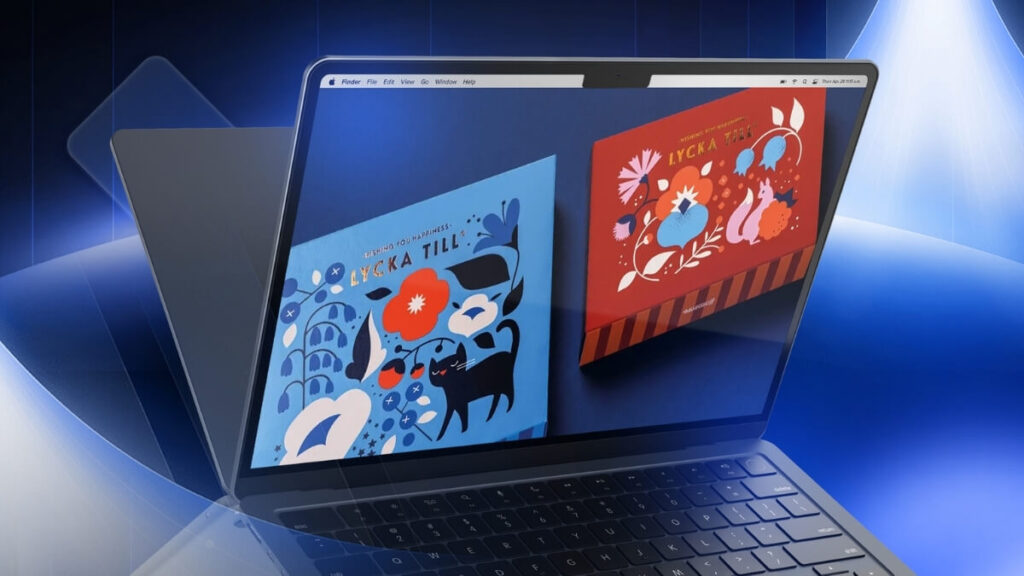
People crave texture. Paper grain, fabric weaves, embroidered details, rough edges, ink bleed. These are not just retro throwbacks. They are emotional triggers that remind viewers a real person made something.
Canva’s platform data shows a 30% surge in searches for touchably tactile, realistic textures, driven by the boom in CGI and hyper-real materials pushing audiences in the opposite direction. Adobe’s 2026 trends data confirms the same pull toward sensory, analog-feeling design.
This works because texture does what smooth AI gradients cannot: it creates a physical association. Your brain processes a paper grain and connects it to the real world. That connection builds warmth and authenticity faster than any color palette choice.
4. Maximalist Collage and Layered Compositions Are Back
Minimalism had its moment. Now the pendulum is swinging hard toward controlled chaos.
Searches for modern bold fonts are up 65.7% and collage art searches rose nearly 19%, according to Envato data. Designers are layering photography, illustration, typography, and texture within single compositions to create work that feels rich and dimensional.
This is not about being messy for the sake of it. The strongest executions are maximalist with underlying structure. The chaos is intentional. The energy is the point.
Think collage-style layouts, clashing colors that somehow work, hand-drawn marks layered over photography. Zine and Substack-inspired layouts saw an 85% search increase on Canva as audiences gravitated toward editorial storytelling that slows them down rather than flashing by.
5. White Space and Restraint Still Have a Place
Not every brand needs to go full tactile chaos. There is a parallel trend running alongside maximalism, and it is just as strong.
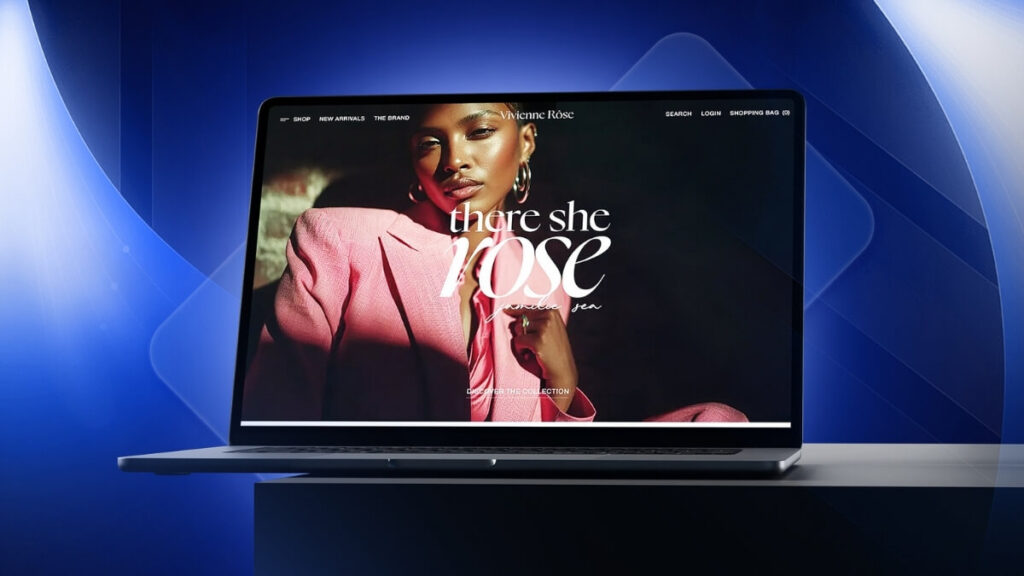
Pantone’s 2026 Color of the Year is Cloud Dancer, essentially white. In a world drowning in noise, restraint is its own statement. Clean layouts, confident typography, generous negative space. Sometimes the most impactful design is the one that strips everything back and lets one detail breathe.
The key is intentionality. Minimalism in 2026 is not default minimalism. It is deliberate restraint paired with a single bold element that does all the work.
What This Means for Your Brand Right Now
These trends are not abstract. They translate directly into decisions you are probably facing.
Your logo. If it looks like it could have been generated by an AI tool in three seconds, it needs more personality. Think about where you can add a curve that feels slightly off, a texture that gives it depth, or a letterform that looks crafted rather than selected.
Your marketing visuals. Stop defaulting to stock photography with perfect lighting and diverse groups of people standing at whiteboards. Use real photography, real textures, imperfect compositions that feel like a human made them.
Your typography. Audit your font choices. Generic is invisible. A wonky serif or a hand-drawn logotype is memorable.
Your digital touchpoints. Even in digital spaces, texture works. Paper grain in background elements, rough-edge dividers, illustrated icons with visible linework. These small choices add up to a brand that feels real.
If you are building or rebuilding your brand identity, these are decisions that compound over time. Getting them right early is worth the investment. Our graphic design team at Lotiva works with brands on exactly this kind of strategic creative work, helping businesses find the visual language that builds trust with their audience. See how we approach graphic design here.
Will Graphic Designers Be Needed in the Future?
This is the question everyone is asking. Here is a direct answer: yes, but the role is changing.
The World Economic Forum’s 2025 Future of Jobs Report did identify graphic design as among the faster-declining job categories over the next five years, largely due to AI automation of production tasks. Research.com projects that nearly 50% of design tasks could be automated by 2030. That sounds alarming, but the context matters.
The tasks being automated are repetitive production work: resizing assets, generating variations, producing stock-level imagery. The work that cannot be automated is the strategic and creative layer: understanding what a brand needs to communicate, choosing which imperfections to keep, making the call that a font choice is wrong for the audience even if it technically looks fine.
According to Clutch’s 2026 data, 39% of businesses rank creativity as the single most important quality when hiring designers. Not speed. Not AI fluency. Creativity. The designers who are building strong careers right now are the ones who have positioned themselves as creative strategists, not just production executors.
The industry is growing. The tools are changing. The demand for human judgment in design has never been higher, because the baseline of what AI can produce has raised the stakes for everything above it.
How Has Graphic Design Changed in the Last 20 Years?
The short answer: everything has changed except the goal.
In 2005, most brand design lived in print. Brochures. Business cards. Billboards. Designers worked with a limited digital toolkit, and producing quality work required significant technical skill and expensive software.
The 2010s brought the social media era. Every platform created new visual formats. Mobile-first design became the standard. Flat design took over as brands adapted to smaller screens. Design democratized as tools became cheaper and more accessible.
The 2020s brought AI and the saturation point. Templates, automated tools, and generative AI made it possible for anyone to produce visually competent content. The result was a homogenized internet where everything looks passable but nothing feels distinctive.
Today, the challenge is not producing design. It is producing design that connects. That is a fundamentally human problem, and it is exactly why the anti-AI aesthetic is not just a trend but a market correction.
Frequently Asked Questions
See the Shift in Action
This tension between AI polish and human imperfection is reshaping every visual channel: read why too-perfect design is losing trust, or put senior designers on your brand with Creative on Demand from $2,000/mo and branding packages from $3,500.