A small business marketing strategy is a simple plan for who you’re trying to reach, where to reach them, and what to say so they become customers. You don’t need a big budget or a dozen channels. You need to know your ideal customer, pick two or three channels you can do consistently, tie every effort to leads or sales, and measure what works. Below is the practical, six-step version you can actually follow, which channels to choose, what to budget, and the mistakes that waste the most money.
Most small business marketing fails for one reason: it’s scattered. A little on social, a boosted post here, a half-finished website there, no plan tying it together. A strategy is just the decision to stop guessing and point your effort at the few things that bring customers.
What a marketing strategy actually is (and isn’t)
A marketing strategy is the plan. Marketing tactics are the individual things you do. The strategy decides who, where, and why; the tactics are the what: the posts, the ads, the emails. Most businesses jump straight to tactics (“we should do TikTok”) without the strategy, which is why the effort feels busy but doesn’t pay off.
A good strategy answers four questions in plain language:
- Who is my ideal customer? Not “everyone.” The specific person most likely to buy.
- Where do they spend attention? Search, social, email, word of mouth, local.
- What do they need to hear to trust me? The proof, the offer, the reason to choose you.
- How will I know it’s working? The one or two numbers that mean real business.
Get those four right and the tactics almost pick themselves.
The 6-step small business marketing strategy
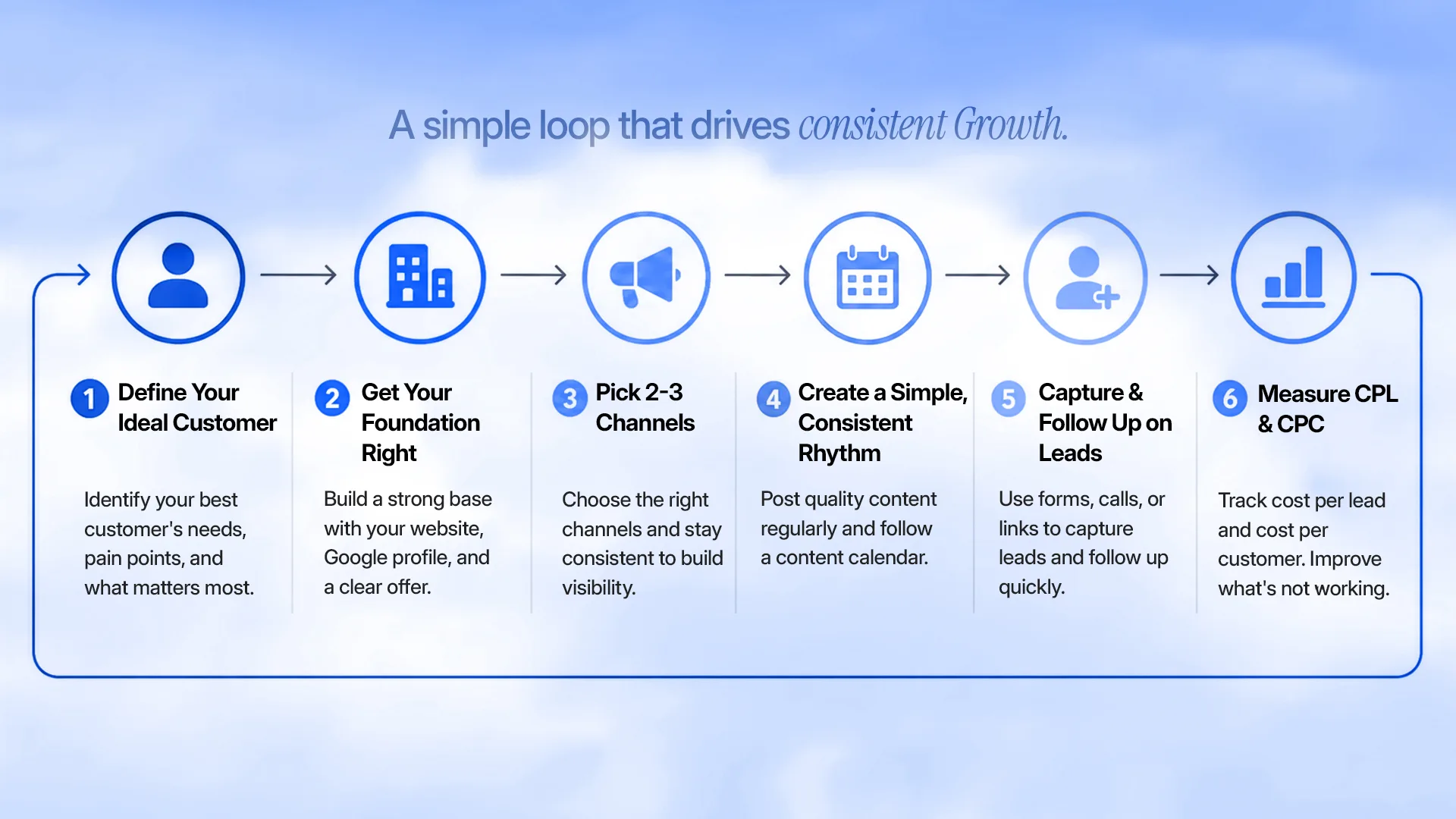
Here’s the version that works without a marketing department:
1. Define your ideal customer. Write down the one customer you most want more of: what they need, what they worry about, and what makes them choose. Every message you make should speak to that person.
2. Get your foundation right. Before you spend on ads or content, make sure the basics work: a website that loads fast and makes the next step obvious, a Google Business Profile that’s complete, and a clear offer. Marketing that sends people to a broken foundation just wastes money faster.
3. Pick two or three channels, not ten. Choose the channels where your customer actually is and that you can keep up consistently. For most small businesses that means some mix of local SEO and Google Business Profile, content and search, one social platform, and email. A focused presence on three channels beats a thin one on eight.
4. Create a simple, consistent rhythm. Consistency beats intensity. One or two quality pieces of content a week, a regular email, and steady posting will outperform a burst of activity followed by silence. Put it on a calendar so it actually happens.
5. Capture and follow up on leads. Traffic that doesn’t turn into a contact is wasted. Use a form, a booking link, or a call, and follow up quickly. The fastest, cheapest growth is usually converting more of the interest you already get.
6. Measure the two numbers that matter. Ignore vanity metrics. Track cost per lead (what it costs to get someone interested) and cost per customer (what it costs to close one). If those are healthy, do more. If not, fix the offer or the channel.
Run that loop for ninety days before you judge it. Marketing compounds; it rarely pays off in week one.
Which channels should a small business use?
You don’t need all of these. Pick the two or three that fit your customer and your time:
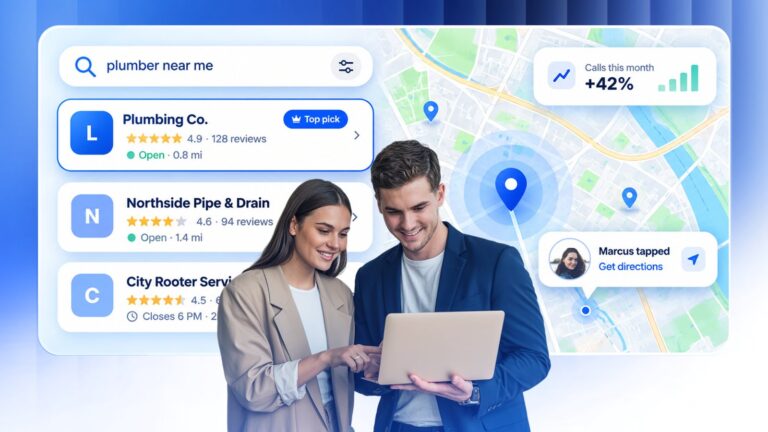
- Local SEO and Google Business Profile: essential for any business with a location or service area. It’s where “near me” searches and map results come from.
- SEO and content: the long game that compounds. Articles and guides that rank bring customers for years, and now feed AI answers too.
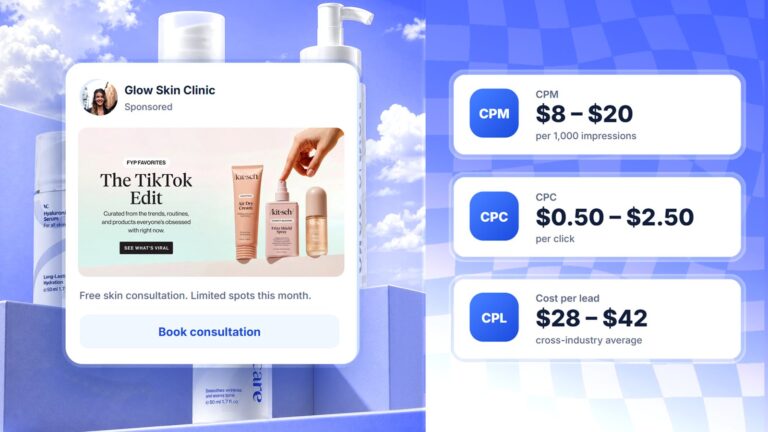
- Paid ads (Google and Meta): the fast lane. You pay for visibility today, which is great for testing offers and filling gaps while SEO builds.
- Social media: brand, trust, and reach on the one or two platforms where your buyers actually spend time.
- Email: the highest-return channel for turning interest into repeat sales, once you have a list.
A simple, strong starting mix for most local small businesses: Google Business Profile plus local SEO, one content channel, and email. Add paid ads when you have budget to test.
How much should a small business spend on marketing?
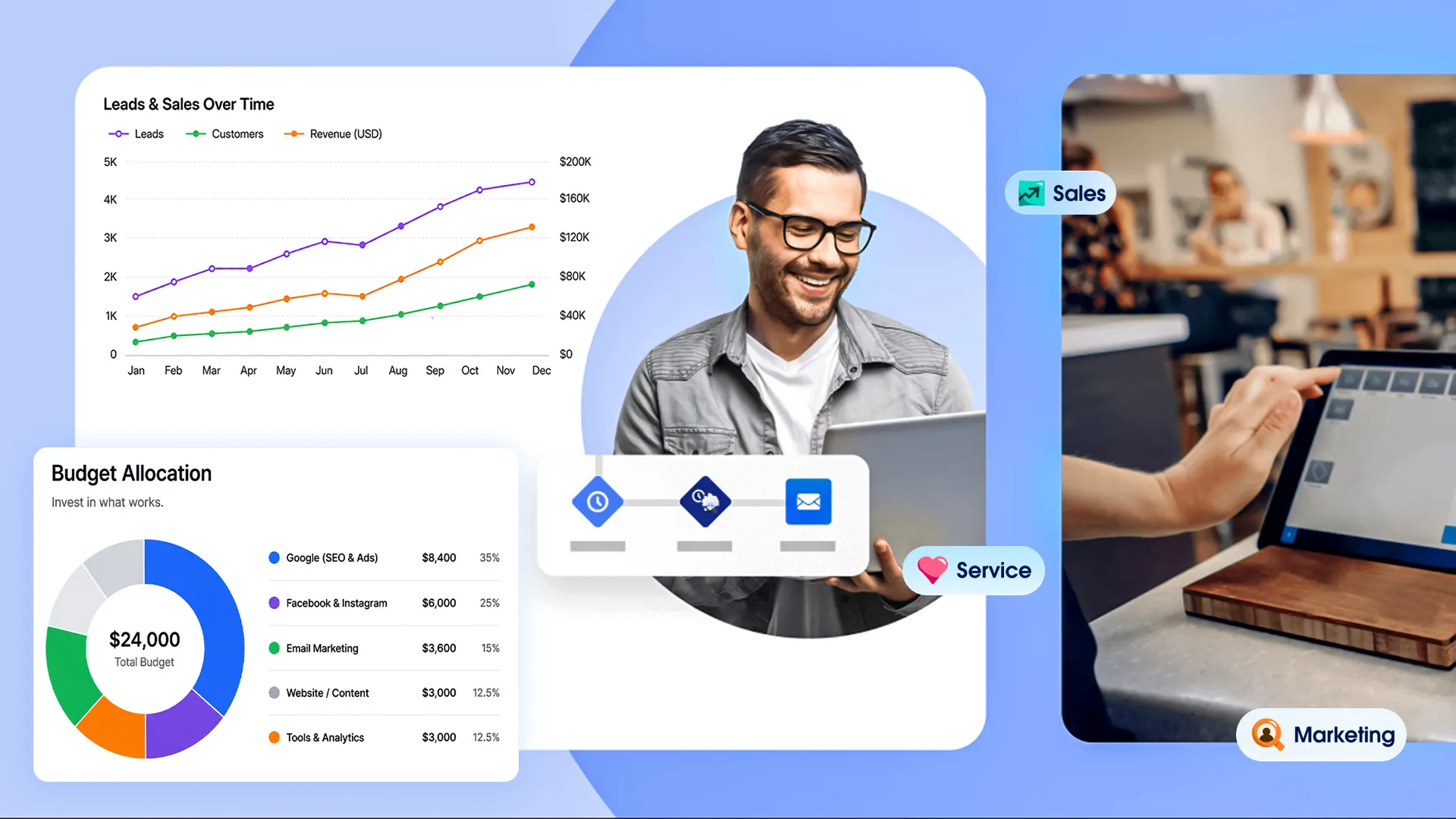
A common benchmark is 5 to 10 percent of revenue on marketing, higher if you’re growing aggressively or newer and need to build awareness. But the number matters less than where it goes. A small budget pointed at the right two channels beats a big budget spread thin.
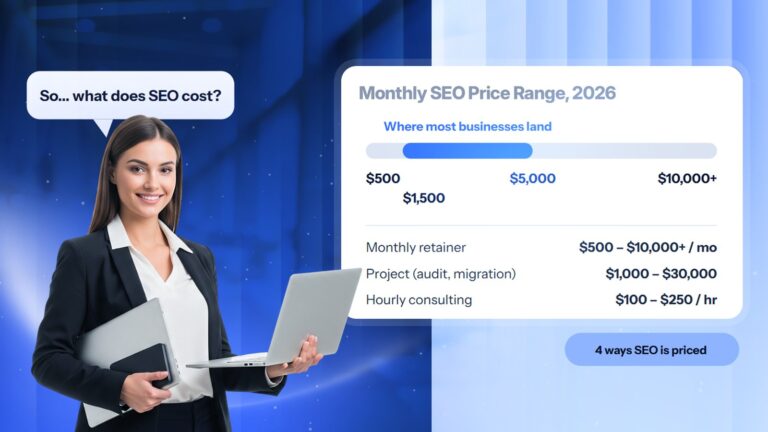
If you’re hiring help, expect a freelancer or entry package around $1,000 to $2,500 a month, and a full-service agency from around $2,000 a month on a flat plan up to several thousand for a broader program. For a full breakdown, see our guide to how much a digital marketing agency costs.
The 5 mistakes that waste the most money
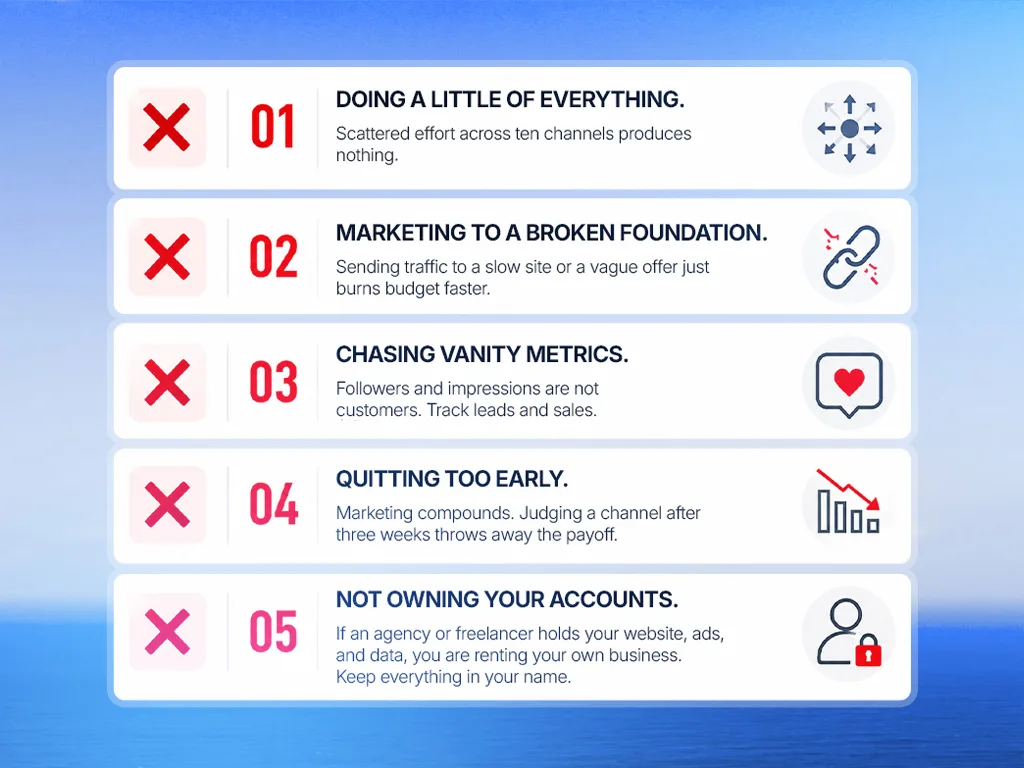
- Doing a little of everything. Scattered effort across ten channels produces nothing. Focus.
- Marketing to a broken foundation. Sending traffic to a slow site or a vague offer just burns budget faster.
- Chasing vanity metrics. Followers and impressions aren’t customers. Track leads and sales.
- Quitting too early. Marketing compounds. Judging a channel after three weeks throws away the payoff.
- Not owning your accounts. If an agency or freelancer holds your website, ads, and data, you’re renting your own business. Keep everything in your name.
Avoid those five and you’re ahead of most of your competitors, who are still boosting random posts and hoping.
Do it yourself or hire help?
If you have the time and enjoy it, the six steps above are entirely doable yourself, and plenty of small businesses run great marketing in-house. Hire help when marketing is eating the hours you should spend running the business, or when you want senior expertise across several channels without building a team.
If you do hire, the smart move is one partner who runs the whole strategy rather than three vendors who don’t talk to each other. That’s how Lotiva works: your whole marketing under one plan, on flat pricing from $2,000 a month. See how the options compare in our guide to the best marketing agencies for small businesses.
The fastest way to start is a conversation. Book your free strategy call and we’ll walk through your foundation and channels together, and leave you with the two or three things to fix first, whether you hire us or not.
See where your marketing stands
Book a free strategy call and we’ll walk through your foundation, your channels, and the two or three things to fix first, whether you hire us or not.
Frequently asked questions
What is a small business marketing strategy?
It’s a simple plan for who you’re trying to reach, where to reach them, and what to say so they become customers. It decides your ideal customer, the two or three channels you’ll focus on, the message that earns trust, and the numbers you’ll track. The strategy comes first; the tactics like posts and ads follow from it.
How do I create a marketing strategy for my small business?
Follow six steps: define your ideal customer, fix your foundation (website and Google Business Profile), pick two or three channels you can do consistently, create a steady rhythm of content and outreach, capture and follow up on leads, and measure cost per lead and cost per customer. Run the loop for ninety days before you judge it.
How much should a small business spend on marketing?
A common benchmark is 5 to 10 percent of revenue, higher if you’re newer or growing fast. But where the money goes matters more than the amount. A small budget focused on the right two channels beats a large budget spread across ten. If you hire help, plans start around $2,000 a month for a flat full-service agency.
What are the best marketing channels for a small business?
The best channels are the ones where your customers actually are and that you can keep up consistently. For most local small businesses that means Google Business Profile and local SEO, content and search, one social platform, and email. Add paid ads when you have budget to test. Focus beats spreading thin.
How long does small business marketing take to work?
Paid ads can produce leads within days, but most marketing compounds over months. SEO, content, and email typically take three to six months to build real momentum, and keep paying off after that. The biggest mistake is quitting a channel after a few weeks, right before it starts to work.
Should I hire a marketing agency or do it myself?
Do it yourself if you have the time and enjoy it, since the core steps are learnable. Hire help when marketing is eating the hours you need to run the business, or when you want senior expertise across several channels. If you hire, one partner running the whole strategy usually beats juggling several separate vendors.

Lily Andrews
Founder of Lotiva. Over a decade helping small businesses grow with SEO, paid ads, and AI-driven marketing. Connect on LinkedIn.